

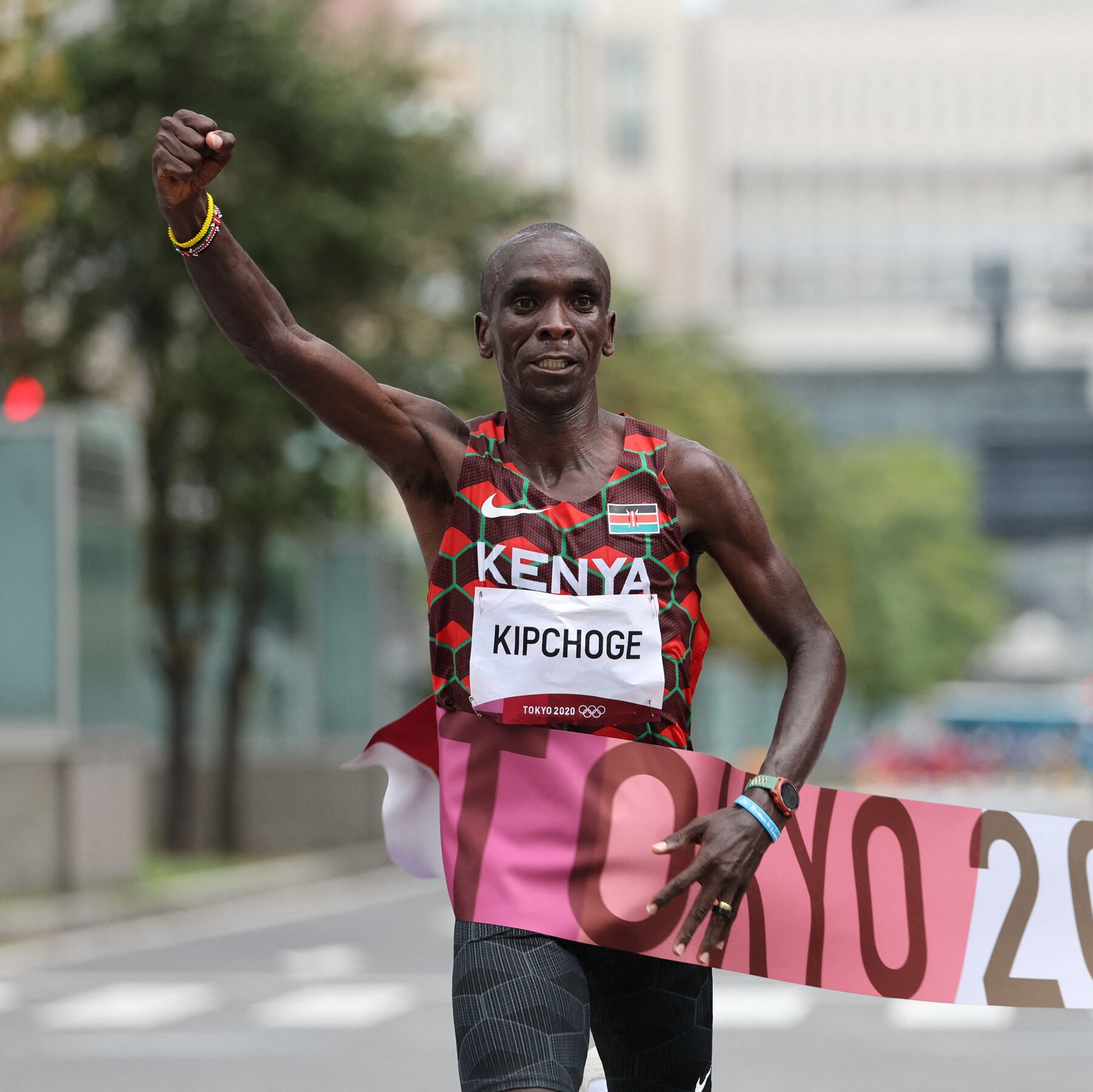
Eliud Kipchoge, from Kenya, is one of the most remarkable athletes of his generation and his achievements have reached far beyond medals and records. Born in 1984 in Kapsisiywa, a small village in Nandi County, Kipchoge grew up running long distances through rural roads. As he matured, his natural talent and disciplined training earned him a place among the world’s elite long-distance runners.
Kipchoge’s greatest contributions to the world came not just through victories, but through his unyielding belief in human potential. In 2016, he won Olympic gold in the marathon, becoming an inspiration to millions. But his most famous feat came in 2019, when he ran a marathon in under two hours, 1:59:40 in Vienna. Although this “sub-two-hour marathon” did not count as an official world record because of pacing and special conditions, it became a symbol: if one human can run 42.195 kilometers in under two hours, many barriers we see as fixed are simply waiting to be challenged.
That run changed how people think about endurance, discipline, and possibility. Kipchoge’s motto, “No human is limited,” resonated worldwide, even outside sport. His achievement motivated not only runners, but everyday people aiming to overcome obstacles in education, work, health or personal goals. Schools, youth groups, and community programs around the world began using his story to teach dedication, hope, and perseverance.
Beyond symbolic inspiration, Kipchoge also advances social causes. He supports youth training and health projects in Kenya, giving back to the community that shaped him. His humility, discipline, and global reach prove that greatness can arise from humble beginnings and that one Kenyan runner’s ambition can challenge the world to believe in human potential again.