


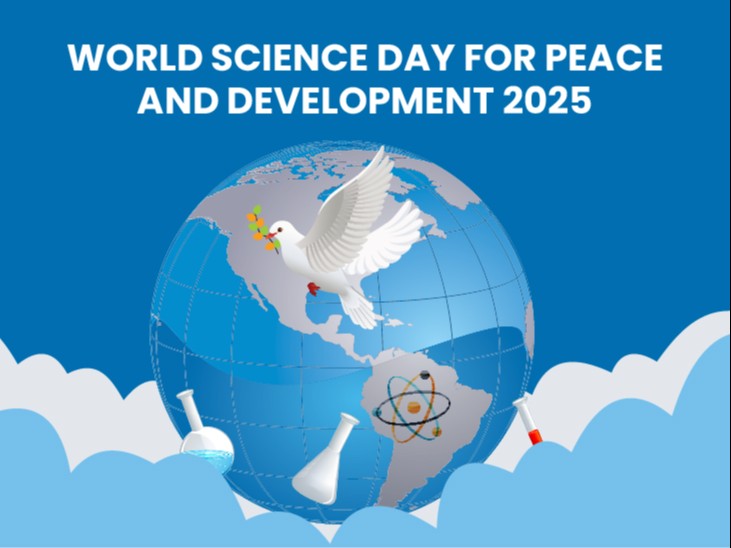
Today, the world celebrates World Science Day for Peace and Development, a day that reminds us of the vital role science plays in shaping societies, fostering peace, and promoting sustainable development. While science has been a global endeavor, Africa and Africans have contributed immensely to the advancement of knowledge, innovation, and solutions that address local and global challenges.
African scientists and innovators have historically and continually pushed the boundaries of discovery. In medicine, Dr. Salim Abdool Karim from South Africa has been at the forefront of HIV research, helping millions through groundbreaking studies. African ingenuity also shines in technology, with innovators like Kenyan engineer Bright Simons, who developed mobile-based systems for financial inclusion and healthcare solutions, improving lives across the continent.
Africa’s contributions to environmental science are equally remarkable. From the Sahara’s ancient meteorological observations to modern climate research, African scientists are providing crucial insights into climate change and sustainable agriculture, ensuring food security for millions. In astronomy, the Square Kilometre Array (SKA) project in South Africa and other African nations is positioning the continent as a global leader in space science, pushing humanity’s understanding of the universe.
Moreover, Africa has a rich tradition of indigenous knowledge, including advanced farming techniques, herbal medicine, and architecture, which have influenced modern science and sustainability practices worldwide.
These contributions show that science is not just about laboratories and equations, it’s about creativity, problem-solving, and improving lives.On this World Science Day for Peace and Development, it is essential to celebrate the brilliant minds across Africa who continue to advance knowledge, foster innovation, and contribute to global development. Their work reminds us that African science is not only part of our past but also central to shaping a peaceful and prosperous future.