

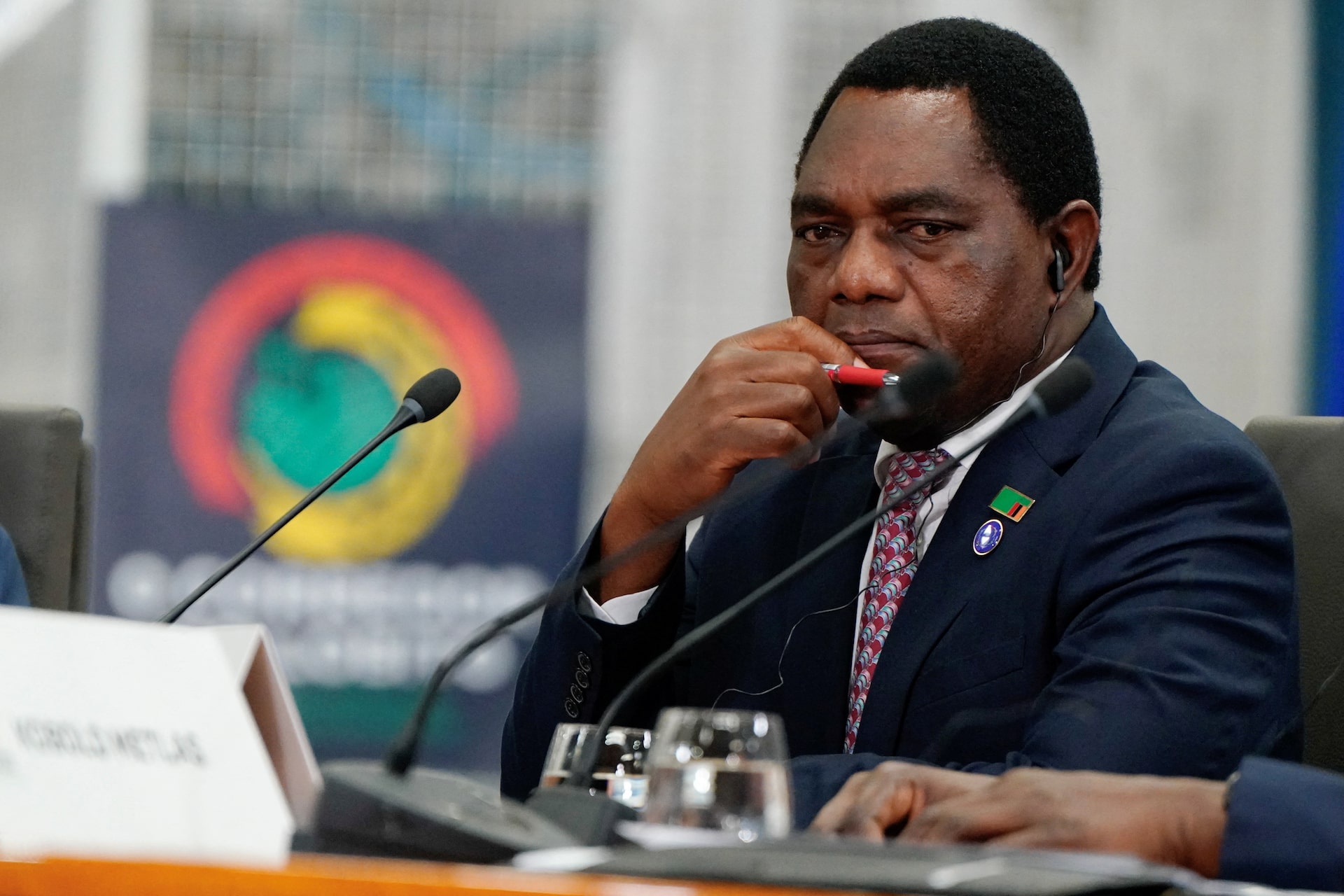
Zambian President Hakainde Hichilema has approved constitutional changes that significantly enlarge the size of parliament, a move that has sparked criticism just months ahead of the country’s national elections.
Reports indicate the reforms will raise the number of members of parliament from 167 to roughly 280. This will be achieved by creating additional constituencies, reserving 40 new seats for women, youth, and people with disabilities, and increasing the number of presidential appointees from eight to 11.
The amendments were signed into law about eight months before Zambia’s presidential and parliamentary elections, in which Hichilema is expected to run for a second term. Critics, including church leaders and civil society representatives, argue the changes were rushed through parliament and could give the ruling party an unfair advantage.
Opponents warn that redrawing constituency boundaries and expanding parliamentary seats so close to the vote risks tilting the political landscape. Some civil rights advocates cautioned that the ruling party might use the changes to strengthen its power, particularly by creating new constituencies in areas of strong support.
Hichilema has dismissed these concerns, saying the reforms were carried out in good faith after sufficient consultation. He has previously stated that several constituencies are too large to allow effective representation and that smaller districts would enhance service delivery.
The decision has also faced criticism from opposition politicians, who question the timing, noting that Zambia is still recovering from a prolonged debt crisis and grappling with significant economic challenges.