


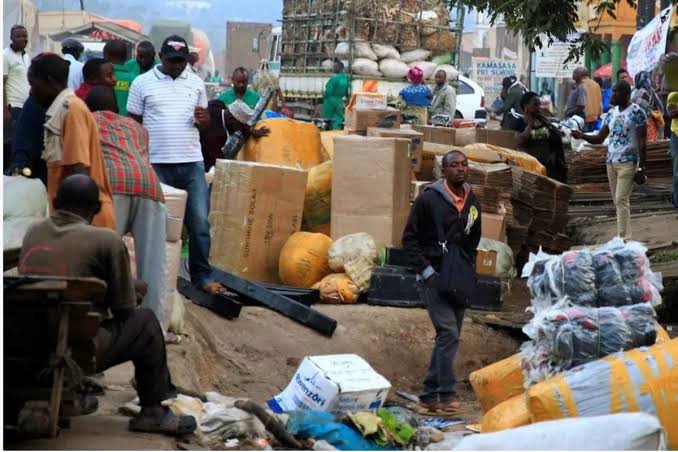
Traders from Rwanda and Uganda are making huge profits as rebel-controlled areas in eastern Democratic Republic of Congo (DRC) increasingly depend on them for essential goods and supplies.
Despite ongoing insecurity and power struggles involving the M23 rebel group, business activity has remained strong across the eastern territories of Congo since the start of the year.
Recent data from Kigali shows that Rwanda’s exports to the DRC surged sharply in the first half of 2025, largely driven by growing demand from conflict-hit regions in the east.
Even as M23 insurgents expand control over vast parts of the region, they have turned to Rwanda for key supplies, ranging from construction materials to consumer products to sustain civilian life in North and South Kivu provinces.
According to the National Bank of Rwanda, exports to the DRC rose by an impressive 72.9 percent, becoming the biggest driver behind a 30 percent increase in Rwanda’s overall exports to the East African region.
While officially listed as exports to the DRC, much of the trade bypasses areas under Kinshasa’s authority, moving instead through crossings controlled by M23 forces.
The central bank report stated, “Rwanda’s formal exports to the East African Community increased by 30.4 percent, reaching $155.1 million in the first half of 2025, up from $118.9 million in the same period of 2024. This growth was mainly pushed by higher exports to the DRC and Uganda.”
Uganda’s own trade with eastern Congo has also flourished. Data from the Bank of Uganda reveals that exports to the DRC exceeded $1 billion, showing how traders and transporters have adapted quickly to the instability.
The resumption of Uganda Airlines flights to Kinshasa has also helped strengthen new trade links, especially as insecurity and government-imposed banking restrictions in Goma and Bukavu forced many Congolese businesspeople to relocate their operations to Kampala.
Much of this trade boom has been fueled by informal networks of cross-border traders who continue to move goods westward despite the ongoing conflict.
Rwanda’s key exports to Congo include cement, steel, processed foods, beverages, and sanitary products, all of which are being supplied mainly to M23-controlled zones.
Most border routes used for these exports, such as the Grande Barrière, Petite Barrière, and Rusizi 1 & 2, are under rebel control, as well as key trading areas like Rubaya, Walikale, Nyamibwe, and the entire Lake Kivu corridor.
This control has allowed trade to continue flowing smoothly into the Kivu and Ituri regions, where M23 maintains stronger ties with Kigali than with Kinshasa.
Currently, there are no major overland or air trade routes from Rwanda to Kinshasa-led areas such as Lubumbashi or Kisangani that do not pass through M23 territories, further deepening the rebels’ economic leverage in eastern Congo.