

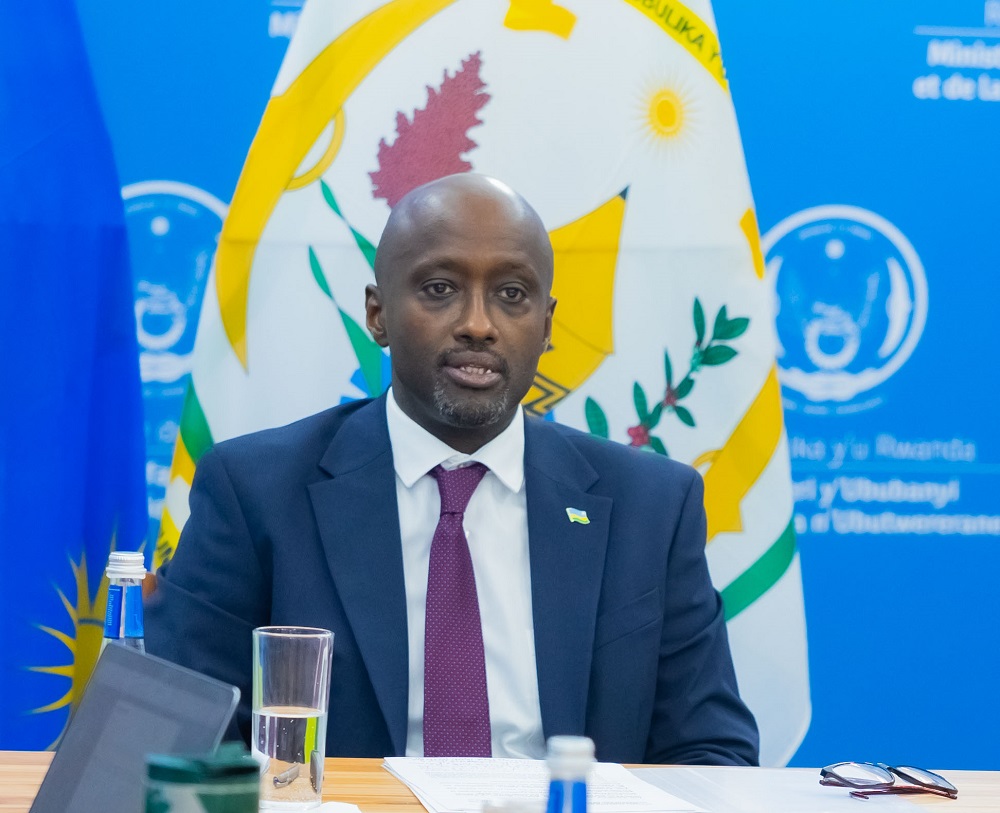
Rwandan Foreign Minister Olivier Nduhungirehe has said that the issue between Rwanda and Burundi is a security issue because they are collaborating with the FDLR terrorist group, which aims to continue to destabilize the country and perpetuate the Genocide in Rwanda.
Burundian forces have been collaborating with the FARDC for more than three years in the fight against the AFC/M23 in the war against the Tshisekedi regime. Various UN reports indicate that government forces are collaborating with FDLR terrorist group fighters in this war.
The FDLR is a terrorist group made up of former members of the EX-FAR and Interahamwe who committed the 1994 Genocide against the Tutsi in Rwanda. This group is based on the ideology of Genocide and has spread it in the East of the DRC for more than 30 years.
When asked by RBA whether Burundi supports the FDLR, Minister Nduhungirehe replied that they do.
He said, “Burundi is not supporting the FDLR, but rather they are cooperating. Burundi is cooperating with the FDLR because it is one alliance, the FARDC is cooperating with the FDLR, it is cooperating with the Burundian army, it is cooperating with the mercenaries, they are all one alliance.”
Nduhungirehe said that in South Kivu, more than 20,000 Burundian soldiers were deployed, who had confined the Banyamulenge in their homes so that they could not go to the markets and other activities that would allow them to make a living.
In the eastern DRC, there are also between 7,000 and 10,000 fighters fighting on the side of the FARDC army in collaboration with Burundi.
Nduhungirehe said, “The main issue we have is the issue of security. You cannot be cooperating with the FDLR without wanting to disrupt the security of Rwanda because what the FDLR wants is to disrupt the security of Rwanda and remember that in 2023 during the elections in the DRC, President Tshisekedi said in political meetings or on radio and television that he intended to bomb Kigali without putting a single soldier on the ground and that he would help the Rwandan youth to overthrow the Rwandan government.”
Tshisekedi made these statements in broad daylight and his subsequent actions reflected this as he immediately brought together the FARDC, FDLR, Burundian forces, and mercenaries to join forces in this struggle that is leading to insecurity in Rwanda.
He said, “All of these things threaten regional security. In order to solve this problem, the Burundian forces must leave eastern Congo, the FDLR group must be eradicated and the attacks by the Congolese army must end, and then we can see how we can implement the agreements we signed.”
Rwanda points out that until March 2025, relations between Rwanda and Burundi were heading in the right direction, but this was hampered by President Ndayishimiye’s disregard for the discussions that took place and going to the international media to accuse Rwanda of preparing to launch an attack on his country.
Rwanda and the DRC signed a peace and economic cooperation agreement on December 4, 2025, in Washington, United States, with the President of Burundi also in the room.
That same day, a coalition of FARDC, Burundian, Wazalendo, FDLR and allied mercenaries launched attacks in South Kivu near the Rwandan border, causing more than 1,000 people to flee to Rwanda.
Nduhungirehe said, “We told the mediators, we told everyone we talked to that what we want is for peace to return. So for peace to return, the Burundian forces that are causing insecurity in South Kivu must leave and the attacks by the Congolese government must also end so that we can implement the agreements we signed.”
The agreements signed include clauses stating that once the fighting stops, a joint security structure with the DRC, Rwanda and the United States will play a role in implementing security-related provisions, including eliminating the FDLR group, and Rwanda will then be able to remove the security measures it has put in place on its borders.