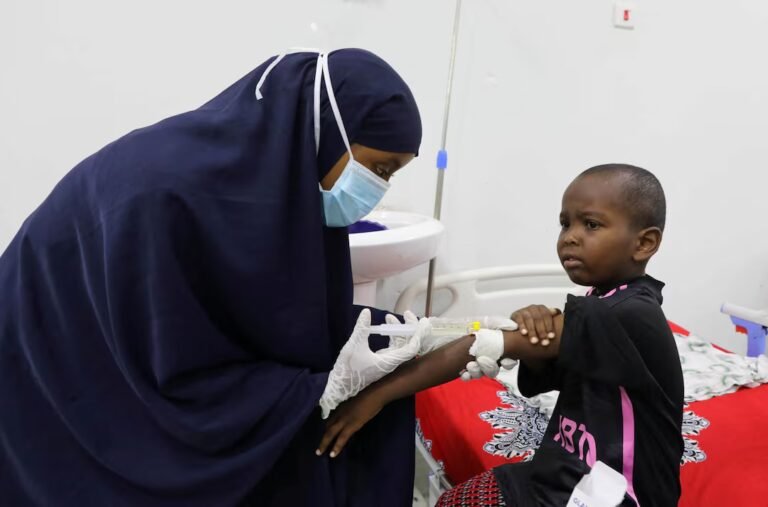


Malaria claimed around 610,000 lives in 2024, the World Health Organization (WHO) reported on Thursday.The majority of these deaths occurred in sub-Saharan Africa, with children making up most of the victims.
Cases also increased, rising from 273 million to an estimated 282 million, according to WHO’s annual malaria report.
The agency pointed to factors such as rising drug resistance, climate change, and funding cuts as contributing to the increase.
WHO warned that progress made in the early 2000s could be reversed, with countries like Ethiopia, Madagascar, and Yemen seeing significant surges in cases.
Malaria is caused by a parasite that is transmitted through mosquito bites.The fight against the disease has been uneven; as new treatments are developed, the parasite gradually becomes resistant.At the start of this century, resistance to the drug chloroquine was widespread, resulting in over 1.8 million deaths per year.Later, artemisinins were introduced, leading to a sharp decline in global malaria mortality. Artemisinin-based drugs continue to be the first-line treatment in most cases.