

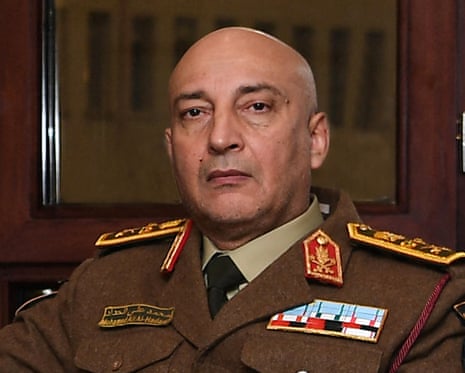
Libya’s Chief of General Staff, General Mohammed Ali Ahmed al-Haddad, has died following a plane crash in Turkey, Libya’s prime minister confirmed late Tuesday, hours after the aircraft vanished from radar shortly after departing Ankara.
General al-Haddad was on board a Falcon 50 private jet that took off from the Turkish capital on Tuesday evening en route to Tripoli. Libyan officials said he was killed alongside four senior military officers and three crew members.
Turkey’s Interior Minister, Ali Yerlikaya, stated that communication with the aircraft was lost at 20:52 local time (17:52 GMT), about 42 minutes after it left Ankara’s Esenboğa Airport. Before contact was lost, the jet had reportedly requested an emergency landing.
Rescue teams later found the wreckage south-west of Ankara, near Kesikkavak village in the Haymana district. Turkish authorities confirmed that both the flight data recorder and cockpit voice recorder have been recovered, while efforts to retrieve the victims’ bodies are still ongoing.
Officials have opened an investigation to establish what caused the crash.In Tripoli, Prime Minister Abdulhamid Dbeibah of the internationally recognised Government of National Unity said he had been informed of the deaths, calling the incident a “great loss” for the nation.
“Libya has lost men who served their country with honesty and commitment,” Dbeibah said, paying tribute to al-Haddad and the officers who died.
Earlier on Tuesday, al-Haddad and his delegation had held meetings in Ankara with Turkey’s Defence Minister, Yaşar Güler. The talks focused on strengthening military and security cooperation between Libya and Turkey. Images released earlier showed the general meeting Turkish officials just hours before the fatal flight.
Turkey has played a major role in Libya since its military intervention in 2019, backing the Tripoli-based government against forces led by eastern commander Khalifa Haftar. Since then, Ankara has built strong political, military, and economic ties with western Libyan authorities.
Libya remains divided between the GNU in Tripoli and the rival Government of National Stability in the east, which is aligned with Haftar. The country has faced persistent instability since the 2011 uprising that led to the fall and death of longtime leader Muammar Gaddafi, leaving behind rival power centres and armed groups.
The crash is expected to have serious political and security implications in Libya, where al-Haddad played a key role in military coordination and managing foreign partnerships.