


Before Burundian President Evariste Ndayishimiye traveled to Washington, D.C., to sign a peace agreement between Rwanda and the Democratic Republic of Congo, he planned a major offensive against the AFC/M23 in South Kivu province.
The attack was intended to show that the Burundian army was regaining its strength after a major defeat in eastern DRC, including Masisi and South Kivu, as Ndayishimiye wanted them to regain control of many of the areas they had lost and to be seen as a force of great power.
Sources from the Burundian military say that they have been searching for a large number of weapons, including heavy weapons, for some time. Last week, 30 trucks loaded with weapons entered the Mukoni camp in the former Muyinga province, where they will be unloaded over a period of three days.
The leader of the human rights organization FOCODE, Pacifique Nininahazwe, announced that unlike before, the Burundian military now has unmanned aerial vehicles (drones) that it uses in combat.
He said, “There was a group of eight soldiers who had been trained for months to use combat drones there at the Muzinda camp. They were eight soldiers who were working for the Burundian military intelligence… When Ndayishimiye left, they said, ‘Now the drones are required to operate, some of them will be trained and sent to Congo.’”
Before Ndayishimiye went to Washington, the Burundian government had sent a large number of soldiers to eastern DRC, leaving many of the country’s military bases empty, except for those of the soldiers protecting the Head of State (BSPI) and the Military Police that protects the Chief of Staff.
Nininahazwe said, “Another [soldier] told me, ‘There are only two bases left with soldiers in Burundi. It is the BSPI that protects the Head of State, which has about 2,000 soldiers, and the Military Police that protects the Chief of Staff of the Burundian Army, Prime Niyongabo, which has about 1,000 soldiers.’”
Before these attacks began, AFC/M23 fighters knew that they were about to be subjected to a major attack by Burundian forces in collaboration with the DRC, Wazalendo groups and the FDLR terrorist group, and began preparations to defend themselves and protect civilians in the areas they controlled.
Residents of Kamanyola town reported that in the early hours of December 2, they saw many AFC/M23 fighters descending, armed with sophisticated equipment including heavy weapons and machine guns, towards the DRC government forces.
At that early hour, Burundian forces began indiscriminately shelling Kamanyola and Kaziba towns, destroying homes, killing many, injuring many, and causing others to flee.
AFC/M23 also fired on Burundian army positions, using equipment including combat drones. This is why soldiers including Lt Elvis Nahishakiye were killed, as Nininahazwe explained in an interview broadcast on the FOCODE channel.
Burundian, DRC, Wazalendo and FDLR forces continue to seize large parts of South Kivu. Since last week, AFC/M23 has been controlling the Kamanyola center, and on December 9, it reached Kiliba, about 20 kilometers from the city of Uvira.
The town of Uvira is a key hub for Burundian troops as it is the main route to North Kivu. It is located just over 30 kilometres from the city of Bujumbura.
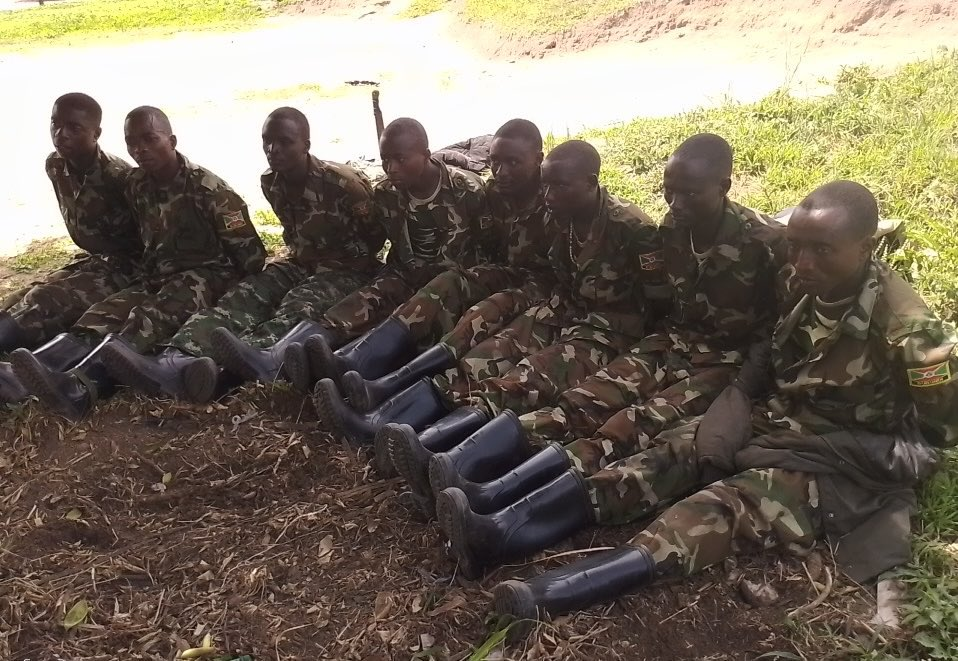
Burundian soldiers with minor injuries are being treated at the Guantanamo military camp near Bujumbura airport, while others are being treated at Kamenge military hospital, Tanganyika Care Clinic and CMCK, which is said to be owned by the Commander-in-Chief, Gen Prime Niyongabo.