

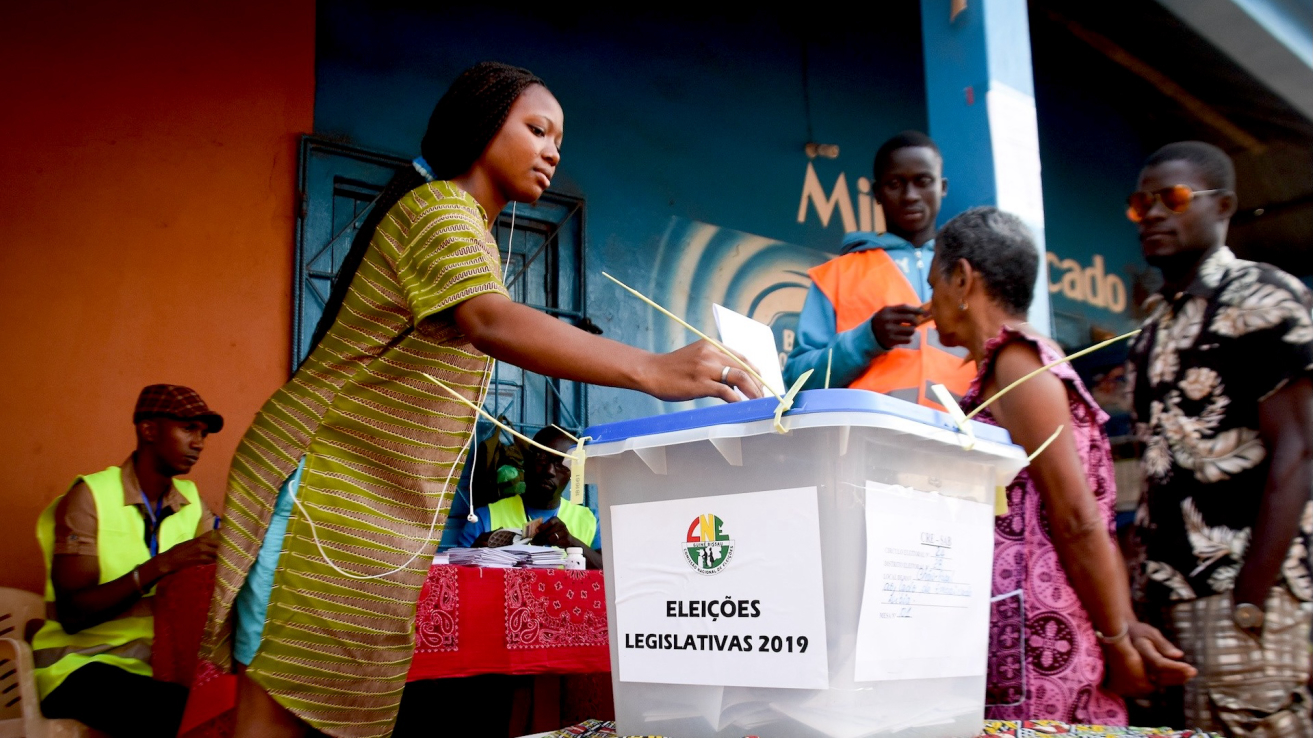
Vote counting is currently in progress in Guinea-Bissau after citizens headed to the polls on Sunday to choose a president and new lawmakers, with President Umaro Sissoco Embaló aiming for another term in a country long shaken by repeated coups.
This election comes at a tense moment for West Africa, where recent disputed polls have raised fears and, according to experts, may encourage militaries in the region that have already seized control in several nations.
Observers say the contest was tight between Embaló and Fernando Dias da Costa, a relatively unknown 47-year-old supported by former Prime Minister Domingos Simões Pereira, who finished second in the 2019 election. To win outright, a candidate must secure more than 50% of the vote; otherwise, a runoff will be required.
Embaló cast his ballot in Gabu, about 200 kilometers (124 miles) from the capital, Bissau, urging citizens to participate. “I will be the one returning for a second term, and I hope the voting process remains calm and peaceful,” he said.
Dias da Costa, after voting, accused the president of heavy-handed tactics and warned that his party would not accept intimidation or arrests of its supporters.
Embaló, 53, a former army general who took office in 2021, enjoys the backing of a coalition of more than 20 political groups. He faces 11 challengers.
Pereira and his party, the African Party for the Independence of Guinea and Cape Verde, were excluded from the ballot after authorities said they missed the application deadline.
Almost half of the nation’s 2.2 million people are registered to take part in the vote.
This election is considered one of the most heated in years due to the exclusion of the main opposition group.
“The democracy we once knew is no longer the model we have today; we are living under a system shaped by one individual,” said political analyst Augusto Nansambe.
Guinea-Bissau remains among the poorest countries in the world, with nearly half of its population living in poverty. Its position as a drug-trafficking corridor between Latin America and Europe, along with decades of coups and attempted coups since independence from Portugal, continues to weigh heavily on the nation’s stability.