


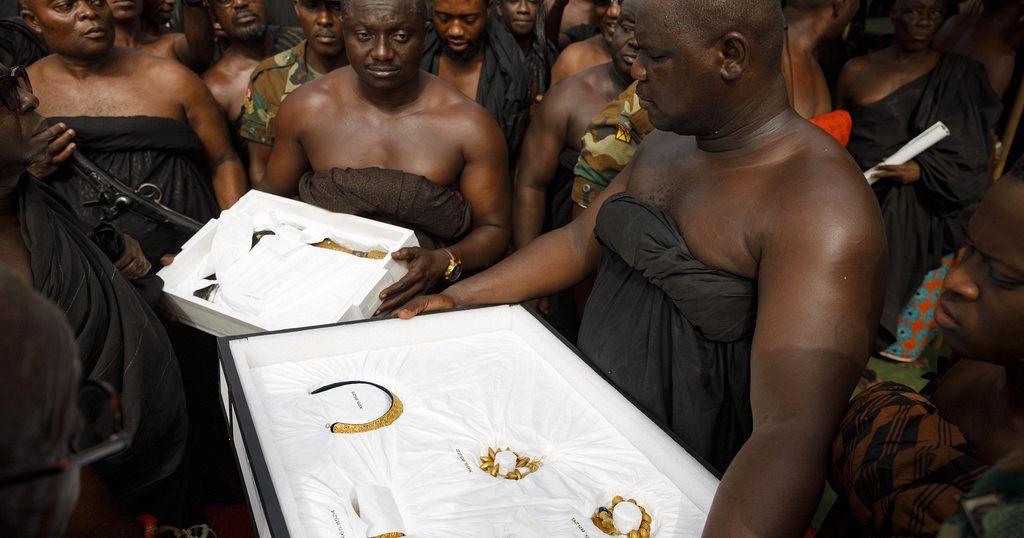
More than 130 gold and bronze artefacts taken from Ghana between the late 1800s and early 20th century have been officially returned to the country.
The precious items were handed over by Britain and South Africa to King Otumfuo Osei Tutu II during a ceremony at the Manhyia Palace Museum in Kumasi.
These artefacts, which include royal regalia, ceremonial gold weights, and traditional drums, are between 45 and 160 years old. They represent key aspects of Asante culture, its governance structure, spiritual values, and the importance of gold as a symbol of power and identity.
The king expressed his gratitude to AngloGold Ashanti, a South African mining company, for returning a number of pieces bought legally from the art market.
Additional artefacts were contributed by the Barbier-Muller Museum in Geneva, originally collected by Josef Muller in 1904. Several other items came from British art expert Hermione Waterfield, who founded the Tribal Art Department at Christie’s in 1971.
Among the returned treasures is a wooden drum believed to have been taken during the British siege of Kumasi in 1900.
Historically, the Asante Kingdom was a dominant and prosperous empire that ruled much of present-day Ghana from the late 17th century until Britain annexed it in 1901. Today, these artefacts return home, restoring a part of the kingdom’s cultural and historical legacy.