

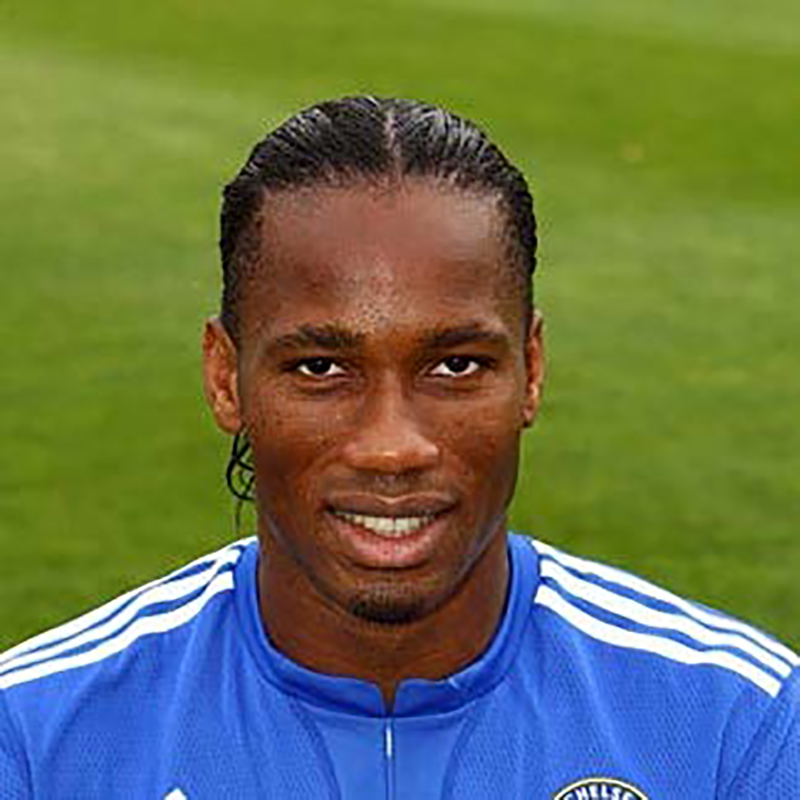
For most, the legacy of Didier Drogba is etched in football history as a prolific striker and a Chelsea legend who consistently delivered on the biggest stage. Yet, beyond the goals and trophies, his most profound victory came off the pitch, using his global fame to make a powerful and emotional plea for peace that helped end the brutal civil war in his native Ivory Coast.
In a nation torn by a five-year conflict, Drogba proved that the power of sport could achieve what diplomacy could not.
The moment that immortalized Drogba as a peacemaker occurred in October 2005. After a crucial victory over Sudan secured Ivory Coast’s first-ever qualification for the World Cup, the jubilant team gathered in the locker room. Instead of a typical celebration, a kneeling Drogba addressed the nation live on television, flanked by his teammates who came from both sides of the civil divide.
He appealed directly to the warring factions, begging them to lay down their weapons and hold elections. His message was a powerful symbol of unity, demonstrating that if players from different backgrounds could unite for a common goal on the field, so too could the rest of the country.
The impact of Drogba’s words was immediate and undeniable. The emotional broadcast, replayed across the country, led to a ceasefire, which proved to be a pivotal step toward renewed peace negotiations.
His peacemaking efforts continued in 2007. Drogba insisted that a pivotal African Nations Cup qualifying match against Madagascar be played in Bouaké, a rebel stronghold, as a gesture of national healing. The symbolism was immense. For the first time in years, Ivorians from both the north and south united in one stadium. When Drogba scored in a 5–0 victory, the ensuing celebrations were a powerful display of the nation’s unified spirit, prompting reconciliation between government and rebel leaders.
Drogba’s commitment to his homeland did not end with the peace agreement. He continues his humanitarian work through the Didier Drogba Foundation, which supports initiatives in health and education for marginalized communities in Africa.
He has also served as a United Nations Development Programme Goodwill Ambassador and, in 2021, was named a World Health Organization Goodwill Ambassador for Sport and Health. His enduring legacy is a powerful reminder of how a single athlete’s voice can become a force for monumental social change.