

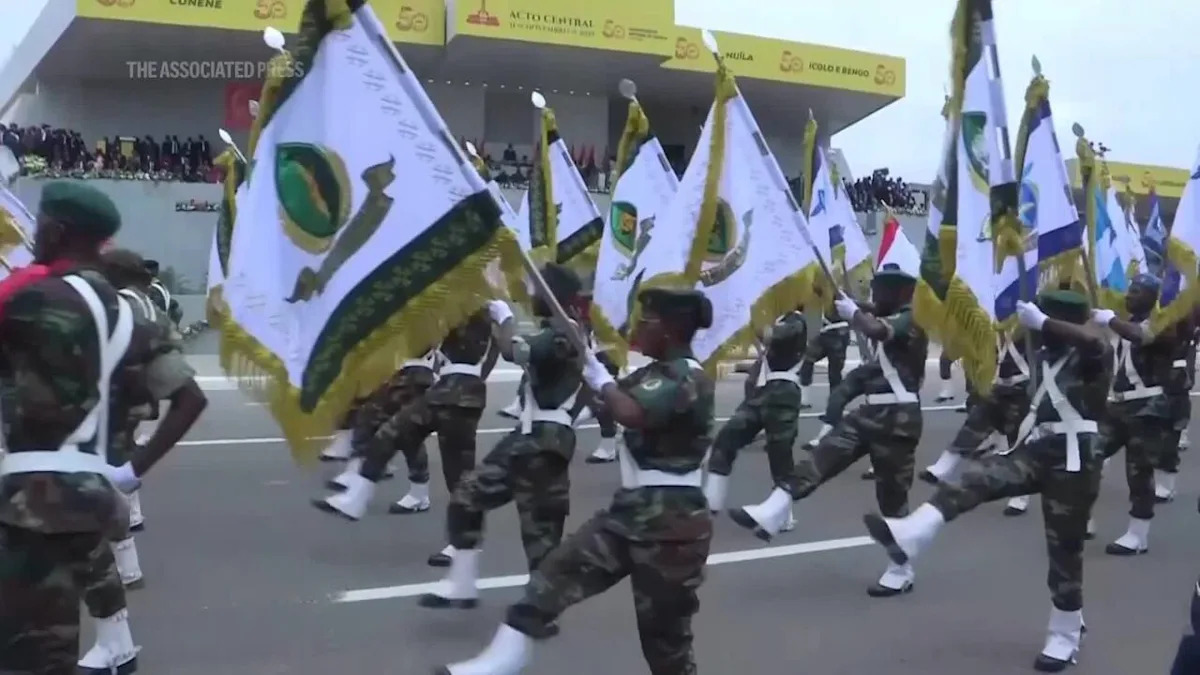
Angola marked the 50th anniversary of its independence from Portugal on Tuesday with a grand military parade in the capital, Luanda.
Soldiers, marching bands, and tanks marched through Republic Square as President João Lourenço addressed the nation from the stands of the Independence Memorial.
“We’ve traveled a difficult path in these 50 years,” Lourenço said, referring to political struggles during the Cold War and the challenges of overcoming Portuguese colonial rule.
Angola declared independence from Portugal on 11 November 1975 after a 13-year liberation war, but the nation quickly descended into a devastating civil war that claimed between 500,000 and 1 million lives and only ended in 2002.
The president stressed that his government will focus on creating an “inclusive society with equal opportunities for all citizens,” while acknowledging that Angola still faces “enormous” and “highly complex” challenges.
Despite progress in infrastructure and urban development over the past five decades, oil-rich Angola continues to struggle with economic and social inequalities. Poverty, unemployment, and limited access to education and healthcare remain pressing issues.
According to World Bank data from 2018, about a third of Angolans lived under the international poverty line of $2.15 a day. Around 16.5 million people, or 52.9% of the population, lived on less than $3.65 per day, the benchmark for lower-middle-income countries.
In his address, President Lourenço also highlighted regional concerns, citing “the volatile situation in the African Sahel countries, the wars in Sudan and the Democratic Republic of the Congo” as issues requiring “our full attention.”