

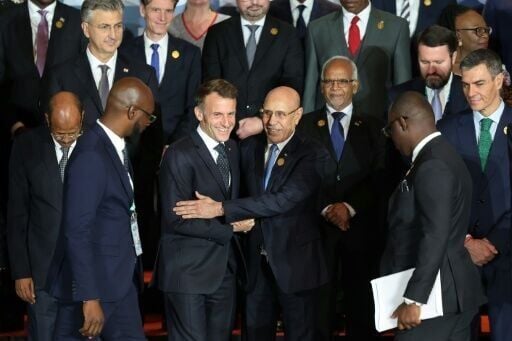
Gathered in Luanda on Monday, leaders from both Africa and Europe renewed their commitment to stronger trade ties and a more coordinated approach to irregular migration. Marking 25 years of AU–EU partnership, the two-day discussions ended with the European Union promising greater support for African countries to industrialise, modernise, and widen their export base.
Delegates applauded the progress already made under the Global Gateway Africa-Europe Investment Package, which draws on public and private financing to expand infrastructure, energy supply and digital links across the continent. The €150 billion initiative aims to boost growth and accelerate Africa’s climate and digital transformation.
In their closing declaration, leaders highlighted Europe’s interest in securing critical minerals while acknowledging Africa’s push for broader economic advancement. European Council President António Costa stressed the need to reduce inequalities and uplift communities through meaningful investment.
He emphasised that focusing on education, innovation, entrepreneurship, and local value creation was essential for shared prosperity. According to him, real development means wealth should be generated and retained where value chains begin.
Europe also received assurances of deeper cooperation in addressing irregular migration, including improved systems for returning failed asylum seekers, an issue that remains politically sensitive across the EU’s 27 member states.
The summit sought to reinforce economic and security relations, with participants underlining that peace can only be achieved through cooperation and respect for global rules. “Without a rules-based order, the world drifts into chaos, and chaos must be avoided,” Costa noted.
Angolan President João Gonçalves Lourenço, who also chairs the African Union, said both sides had agreed to intensify joint efforts on peace and security, especially in combating terrorism and violent extremism. He added that cooperation would extend to climate action, resilience funding, and support for Africa’s clean-energy shift.
Both partners pledged to step up investment in sustainable infrastructure, agriculture, and manufacturing, while expanding mobility and exchange opportunities.
Although Europe remains Africa’s largest source of direct foreign investment, analysts warn that the AU–EU relationship must be renewed if Europe hopes to maintain its leading role, especially as China, the U.S., and Russia compete for Africa’s mineral and energy wealth.