

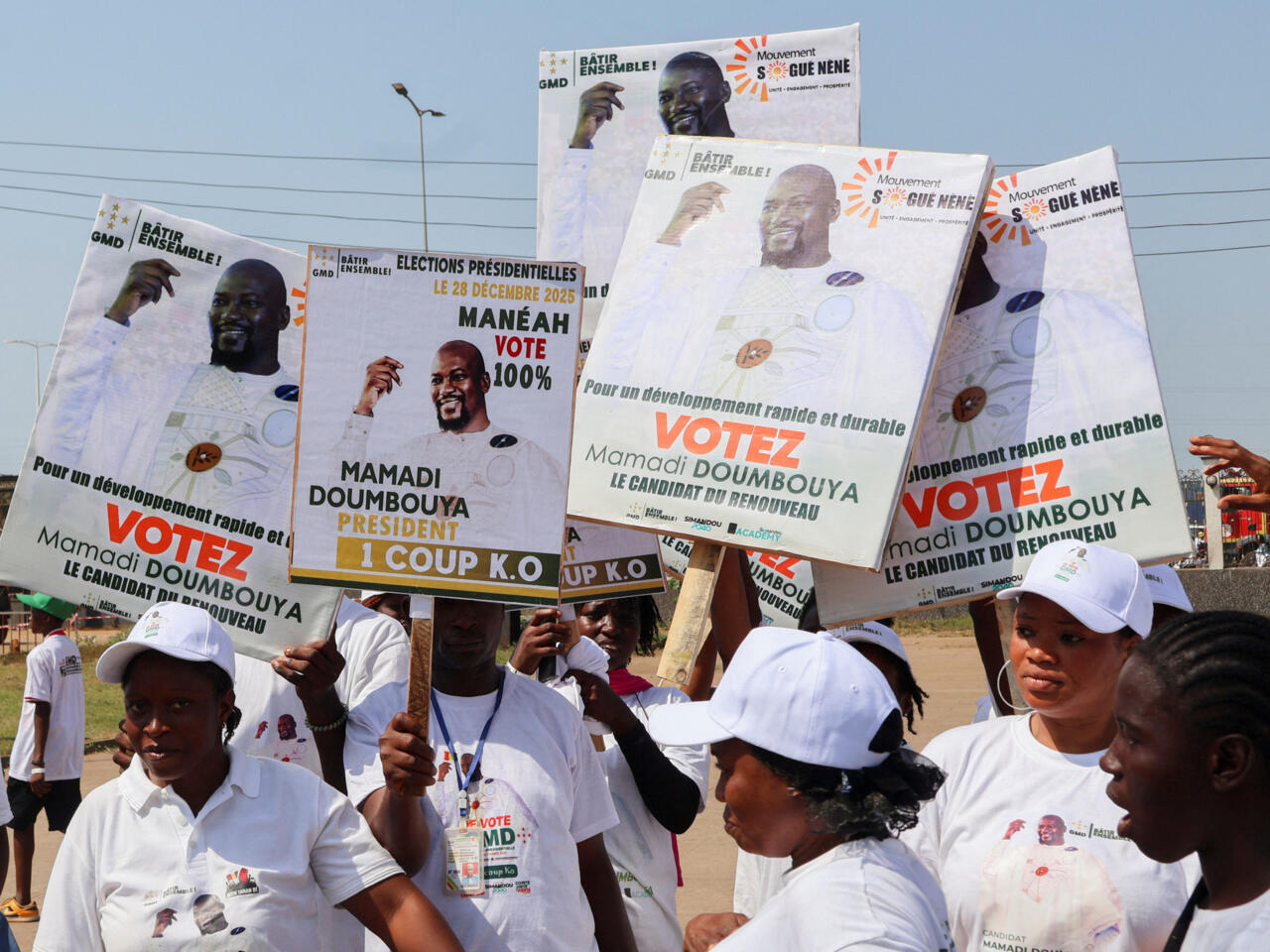
Voices of both support and opposition rang out in Guinea’s capital on Thursday as military leader Gen. Mamadi Doumbouya held his last campaign rally in Conakry ahead of Sunday’s presidential election.
“I came out to support Mamadi Doumbouya because of his kindness, the jobs he helped create for people who needed work, and everything he has done for us and the wider population,” said Mariame Kourouma, one of thousands who gathered at the Palace of the People. “That’s why we are here, to support him as president.”
The rally brought campaigning to an end for Guinea’s first presidential election since the 2021 military takeover that ushered Doumbouya into power. The vote follows years of political turmoil and comes at a time of rising concern about democratic setbacks across West Africa.
Doumbouya continues to enjoy solid backing from supporters who praise his focus on infrastructure projects and his anti-corruption stance. However, the election period has also been marked by controversy, with critics pointing to a clampdown on dissent. Several prominent opposition figures have been pushed aside, either barred from contesting the race or driven into exile.
One of Doumbouya’s main rivals is Abdoulaye Yero Baldé, a former education minister under ex-president Alpha Condé. To many opposition supporters, Baldé represents resistance to constitutional abuse.
“When Alpha Condé asked Yero Baldé to follow him into a third term, he refused,” said opposition supporter Mohamed Lamine Bangoura. “He said, ‘Mr President, I can’t do that.’ We told Guineans we would restore democracy, after two terms, power should change hands.”
Baldé quit the government in protest after Condé pushed through and won a disputed third term, a move that sparked widespread unrest and set the stage for the 2021 coup that removed Condé a year later.
Despite Guinea’s vast mineral resources, more than half of its roughly 15 million citizens live in poverty and struggle with food insecurity. Doumbouya has built his campaign around promises of modernization and economic growth, highlighting road construction, public infrastructure projects and a new constitution approved in a referendum boycotted by opposition groups.
The ruling junta has repeatedly postponed the transition back to civilian rule, eventually opening the door for Doumbouya to run for a newly extended seven-year term.