

The World Bank Board of Directors has approved $100 million, or more than Rwf145.7 billion, to support tax collection through EBM, improve service delivery, and create jobs.
Rwanda has recently undertaken several tax reforms, with plans to improve tax collection, improve public spending, and improve service delivery at both the national and local levels.
These reforms are part of the five-year National Strategy for Accelerated Growth (NST2), which aims to deliver benefits to the public and the private sector.
A statement released by the World Bank shows that its Board of Directors has approved $100 million to support these programs. They will be disbursed through the International Development Association (IDA).
It is a project to be implemented by the Ministry of Finance and Economic Planning in collaboration with the Ministry of Local Government.
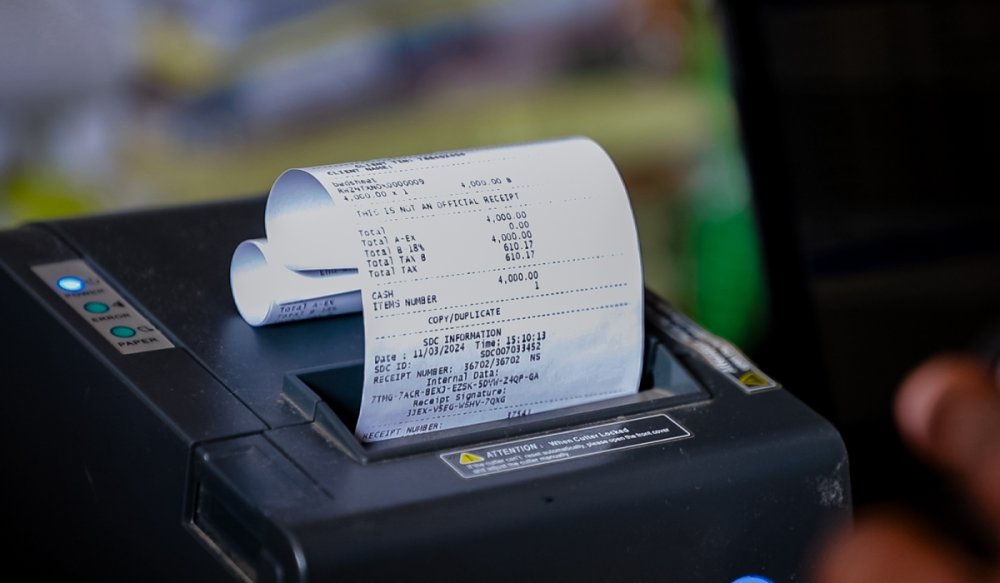
It aims to increase the volume of tax collected, including expanding the use of EBM technology in the collection of Value Added Tax (VAT) and modernizing property tax registration and valuation over time.
Another is to strengthen the use of public funds in a transparent and efficient manner, especially at the national level, through the preparation of sound project studies, improving project implementation, improving procurement, and increasing oversight of public enterprises that do business.
Another goal is to improve local government planning and accountability, with regional governments preparing data-based action plans, publishing budget reports, strengthening efforts to improve financial management, and establishing programs aimed at the development of the population.
The World Bank Country Director for Rwanda, Sahr Kpundeh, said that this program aims to partner with the government in reforms that bring the benefits of development to the population wherever they are.
“This program reflects our partnership with Rwanda and our shared goal of promoting governance reforms that create jobs, increase financial inclusion, and improve services to Rwandans,” he said.
“By supporting government institutions at the national and local levels, this program strengthens the decentralization process and ensures that development benefits reach citizens where they live and work.”
It was approved a few months after the tax reform, as part of a program aimed at increasing the number of taxpayers and tax revenues, improving tax collection and economic sustainability, and promoting self-reliance.
Meron Tadesse Techane, a World Bank specialist in financial management, said the program is a major step towards increasing the number of taxpayers and ensuring that every dollar is spent wisely.
“By leveraging technology, building institutional capacity, and rewarding good performers at the national and regional levels, it will help the government deliver better services, build public confidence, and expand opportunities for the private sector to create jobs,” he said.
The project is expected to significantly support various ministries, public enterprises, and 30 regions of the country. It is at this time that citizens and the private sector will benefit indirectly, through better services and better public investment.
In 2025/26, the RRA was given the target of collecting 3,628 billion Frw in taxes and duties, equivalent to 53% of the budget of 7,032.5 billion Frw.
To achieve this goal, the RRA has put in place a program that will facilitate tax compliance. This includes improving basic tax procedures, such as registration, tax declaration, payment, and providing complete and accurate information.
The RRA has begun collecting new taxes, including a 3% tourism tax levied on accommodation, VAT on electronic devices, petroleum products, and land transportation services, as well as a road maintenance tax for vehicle owners. This is in addition to taxes on hybrid vehicles.
The recent tax reforms are in line with the government’s Multi-Tax Reform Program (MTRS). An additional Rwf255.6 billion is expected this year.