

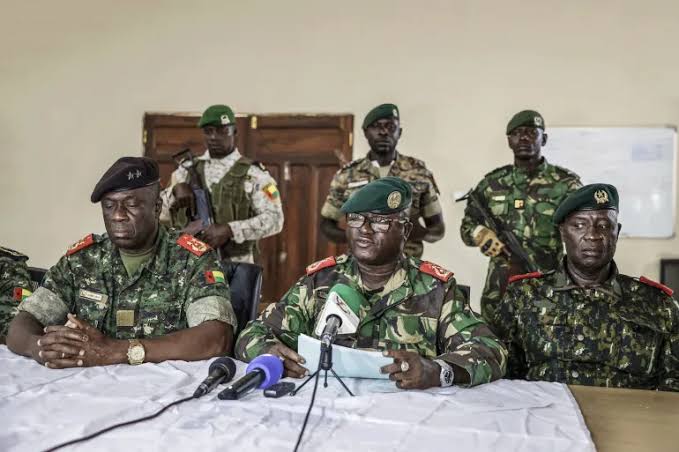
Soldiers in Guinea-Bissau appeared on state television on Wednesday, announcing that they have taken charge of the country.According to a statement released by the military high command, they have “assumed the full powers of the State of the Republic of Guinea-Bissau”.
They said this action was prompted by “the discovery of an ongoing plan” aimed at destabilising the nation by trying to “manipulate electoral results”.
The announcement came just one day after both top contenders in last week’s fiercely contested presidential vote claimed victory.Earlier on Wednesday, gunfire was heard in parts of the capital, Bissau, including around the presidential palace, although it remains unclear who was involved.
Military spokesperson Dinis N’Tchama said the soldiers had formed “the high military command for the restoration of order”, which would govern the country until further notice.
“To suspend, until new orders, all of the institutions of the Republic of Guinea-Bissau, to suspend, until new orders, the activities of all media outlets, to immediately suspend the current electoral process, to close the land border, by sea and national airspace,” he said.
Witnesses in Bissau reported roads leading to the presidential palace being cut off, with heavily armed and masked soldiers manning checkpoints.
Outgoing President Umaro Sissoco Embaló and opposition candidate Fernando Dias da Costa both claimed victory in last week’s polls.
The electoral commission was expected to release provisional results for both presidential and parliamentary elections on Thursday.
A representative from the international election observers said the electoral commission chairman had been detained and the commission’s offices sealed off by the military.
French news outlet Jeune Afrique quoted Embaló as saying he had been arrested in what he described as a coup led by the army chief of staff, adding he was not harmed.
His presidency has faced a legitimacy challenge from critics who argue his mandate expired long ago and that they no longer recognise him as head of state.
Embaló assumed office in February 2020, although the constitution places the presidential term at five years.
This military intervention is the latest in a long history of coups and attempted coups in Guinea-Bissau since it became independent from Portugal in 1974.