

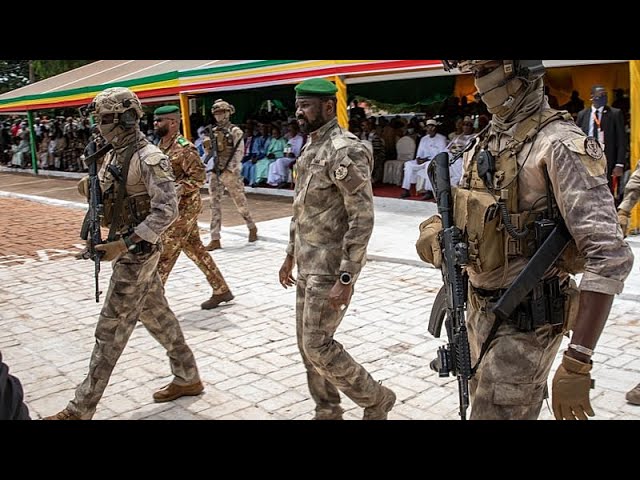
Speaking publicly for the first time, Mali’s junta leader General Assimi Goita addressed the country’s worsening fuel crisis on Monday.
The fuel shortages are a result of a jihadi group blocking tanker trucks from entering the landlocked West African country.
“While escorting fuel tankers, people are dying; there are ambushes on the roads, trucks are catching fire with people trapped inside,” Goita said.
He made these remarks during a meeting with regional authorities in Bougouni while on a visit to the south for the inauguration of a lithium mine.
Up until now, officials had said very little about the blockade carried out by Jama’at Nusrat al-Islam wal-Muslimin (JNIM), a militant group affiliated with al-Qaeda.
In early September, JNIM militants announced a halt to fuel imports into Mali from neighboring countries, following the government’s earlier decision to reduce fuel supplies to remote regions in an attempt to squeeze militants out of their hideouts.
The blockade has placed heavy pressure on Mali’s fragile economy and left hundreds of fuel tankers stuck at the border.
Malian forces have tried escorting fuel trucks from border crossings to Bamako while also striking JNIM positions from the air. Some convoys have successfully reached the capital, but others have been attacked.
General Goita urged citizens to reduce travel to help limit the effects of the fuel shortage.In Bamako, long lines have taken over gas stations, with some people waiting through the night.
The government has announced the closure of schools, embassies have instructed their citizens to leave, and power outages have become frequent.
The blockade marks a significant setback for the ruling military junta in a country heavily dependent on fuel imports from Senegal and Côte d’Ivoire.
JNIM is one of several armed organizations active in the Sahel, a massive stretch of semi-arid land where extremism is rapidly spreading and major attacks are becoming more frequent.