

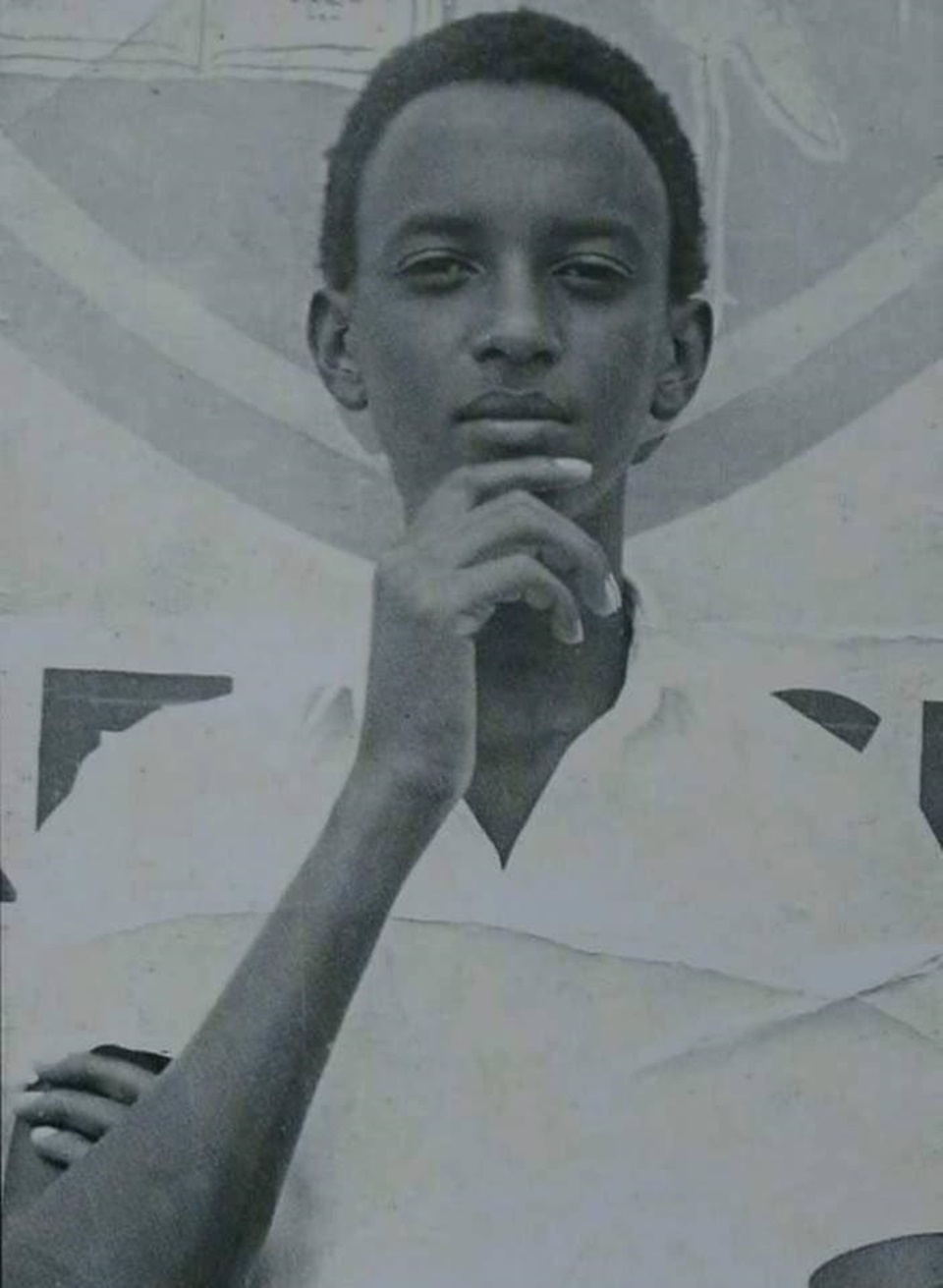
President Paul Kagame’s early years were deeply influenced by experiences that shaped the leader he would become. He began his primary education in the Gahunge refugee camp in Uganda, where his family had fled, and classmates remember him as a polite and observant child, often asking even older peers questions such as, “Why are you dressed like that?” or “Why are you dirty?”
These childhood memories remain vivid for those who knew Kagame. Born in Rwanda’s Southern Province, he later lived in several Ugandan refugee camps, including Rukinga, Nshungerezi, and Gahunge, where he consistently demonstrated discipline and excellence, traits that have stayed with him throughout his life.
Born in 1957, Kagame grew up in a family of integrity. His mother, Asteria Bisinda, and father, Deogratias Rutagambwa, were people of principle. Rutagambwa, an entrepreneur who founded Trafipro, was known for his ethical conduct and was frequently chosen to lead the community even in exile.
Kagame was baptized in November 1957, with Mutembe Ildephonse as his godfather, just a month after his birth.In 1959, political unrest in Rwanda during the Revolution, which targeted the Tutsi population, forced his family to flee. They first sought refuge in the Mutara region before crossing into Uganda on November 6, 1961.
During the journey, Kagame and his mother were separated from his father, who traveled through Burundi and later reached the Democratic Republic of Congo (then Zaire) before finally arriving in Uganda.
Life in exile was challenging, yet Kagame continued his education in the refugee camps. One former acquaintance from Gahunge camp recalls Kagame as a disciplined, neat child who maintained cleanliness and focus while studying at Rwengoro School.
Another peer noted that Kagame, even as a young boy, would approach older students to ask about their responsibilities or remind them of their duties.
“He had a mature demeanor,” said a former classmate. “He would play football with older boys but also ask us why we weren’t studying.”
Kagame excelled academically, emerging as one of the brightest students. A teacher recalls a foreign visitor encouraging students to work hard, promising top performers a chance to study at Ntare School, a prestigious secondary institution. Kagame was among the first to achieve this.
From a young age, Kagame was deeply curious about Rwanda’s history, often learning from older veterans of the Inyenzi movement alongside his childhood friend Fred Rwigema. They spent hours listening to veterans like Maliko, reflecting Kagame’s early passion for his homeland.
After Ntare School, Kagame attended Old Kampala School before joining the Ugandan liberation struggle. Opting for military service rather than university, he believed fighting for Uganda’s freedom would ultimately allow him to return to Rwanda.
Kagame began his military career by hitching a ride in a truck driven by General Lutaaya, one of Uganda’s top officers. He participated in the 1981 attack on Kabamba Military Training School, marking the start of Uganda’s liberation efforts.
During the war, Kagame held key military roles, focusing on discipline and intelligence operations. His professionalism and integrity earned him great respect from fellow soldiers.
“He was a man of integrity, and everyone respected him,” recalled a comrade. “He never tolerated injustice and always acted fairly.”
From his childhood in refugee camps to his military service, Kagame’s early life laid the groundwork for the values he upholds as Rwanda’s president: fairness, integrity, discipline, and a deep love for his country.
Today, Kagame is celebrated for leading Rwanda to freedom, halting the genocide against the Tutsi, and rebuilding the nation with international recognition. He is credited with improving the lives of Rwandans across all sectors, promoting unity, and ensuring inclusivity.
Kagame rejects colonial divisions based on ethnicity. When a Stanford University expert suggested measuring Rwandans’ genealogies to justify such divisions, Kagame dismissed the idea as foolish. He emphasizes that all Rwandans, regardless of background, are united as human beings and that government policy should reflect this unity.
As Rwanda continues to flourish under his leadership, Kagame’s childhood experiences and the values he developed during those formative years remain a testament to his integrity and vision for the nation’s future.